

INDUSTRY
Displays for spectators at sports venues
Plan LED displays for stadiums, arenas and sports venues around viewing conditions, event-day communication and each audience zone. Spectracolor coordinates display selection, structure, installation and service access as one system.

VENUE VIEWING CONDITIONS
Design for the seat, sightline and message
A sports venue is not a single viewing environment. Spectators may watch from nearby seats, across a wide bowl, at a bright exterior approach or within an indoor concourse. Viewing distance, angle, ambient light, message size and exposure time all influence what a display needs to deliver.
The specification should therefore begin with the audience and the location, not with one screen type applied everywhere. Pixel pitch, brightness, physical dimensions, mounting height and content proportions can be defined by zone so that score information, event messages and sponsor content remain legible.
PRIORITY VENUE ZONES
Match the display role to each part of the venue
Main spectator zones
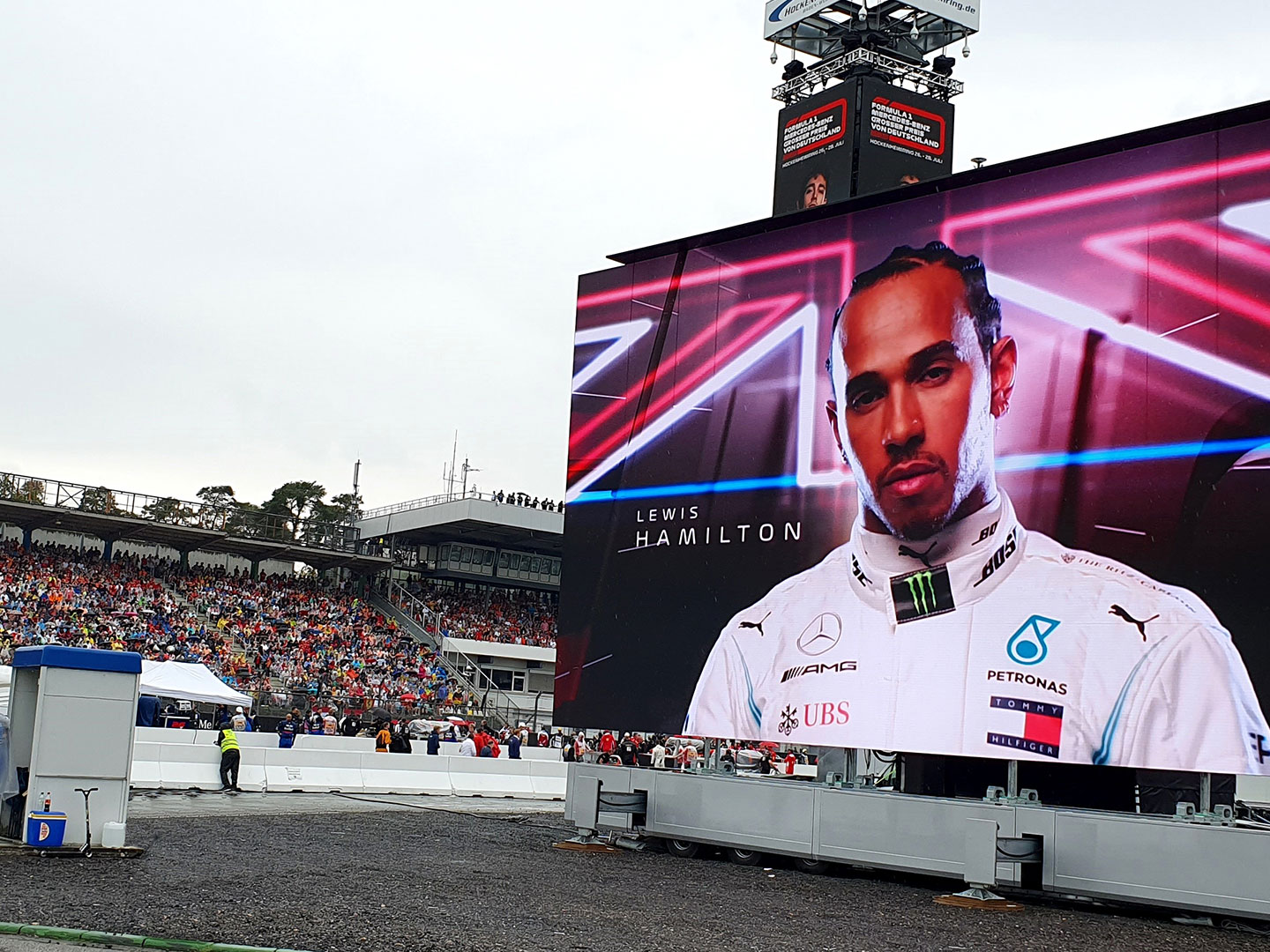
Large-format LED displays can support live event viewing, scores, replays and programmed venue content across seating areas. Screen size, resolution and placement should be evaluated against important sightlines rather than selected from a catalogue in isolation.
Scores and event information
Displays can present score, timing and event information supplied by the venue's designated source. Score systems, timing systems, production platforms and data feeds remain upstream systems unless their interfaces, responsibilities and testing requirements are separately verified and defined within the project scope.
Entrances and fan arrival
Screens at exterior approaches and entry zones can carry event information, welcome messages and sponsor content before visitors reach their seats. Placement should account for daylight, weather exposure, viewing direction, available dwell time and the surrounding architecture.
VISUAL REFERENCES
Real sports venue display environments
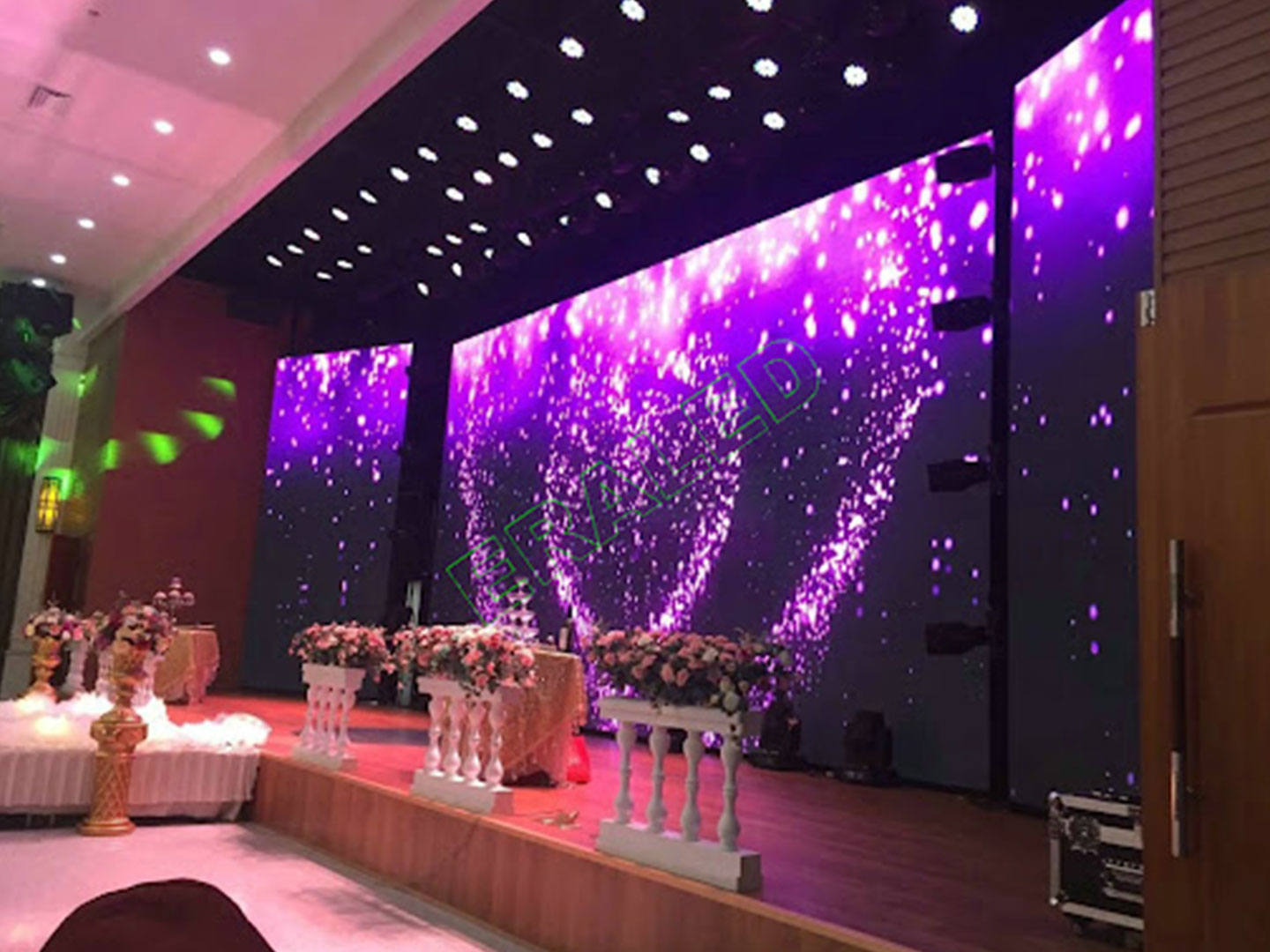
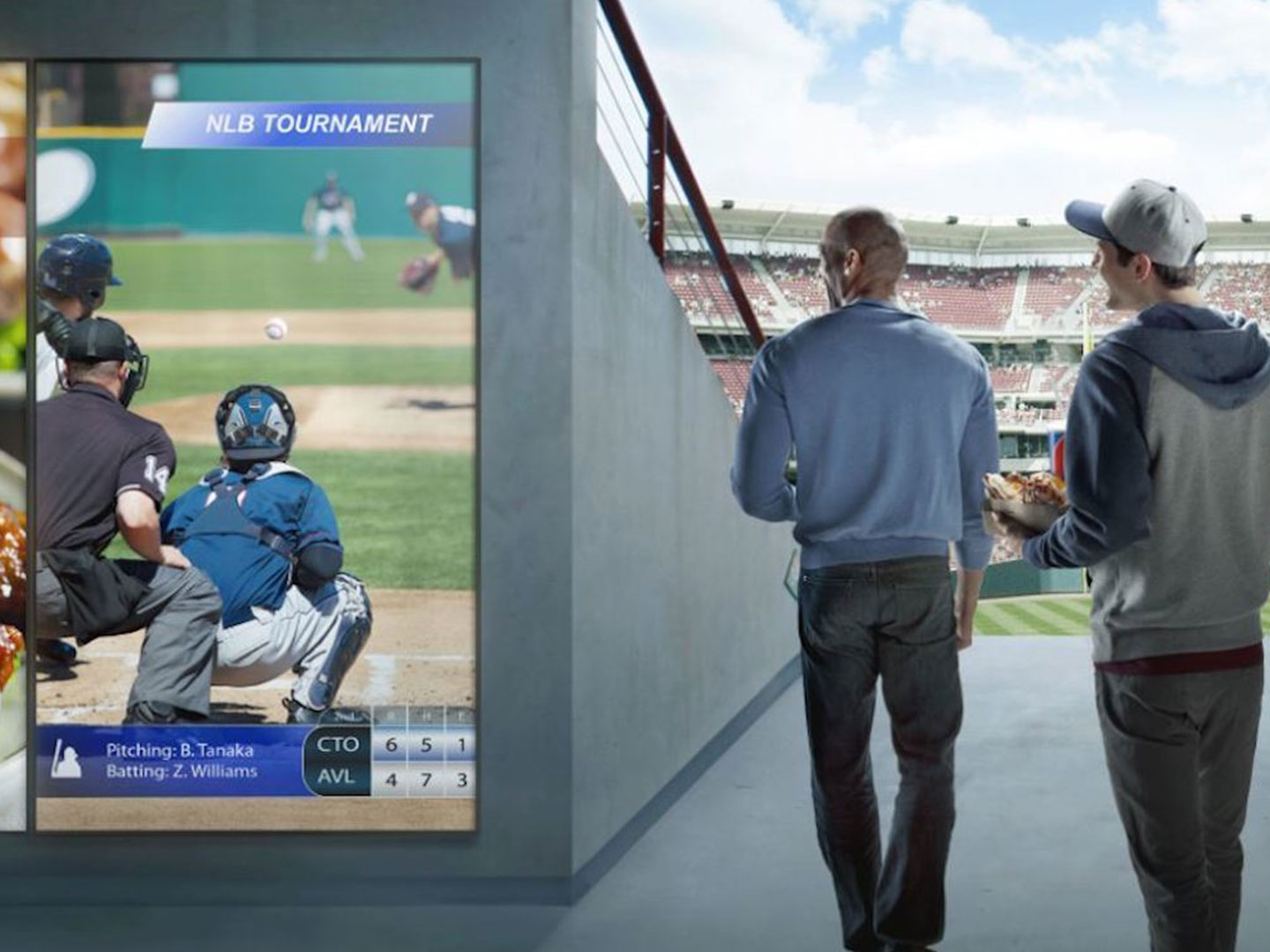
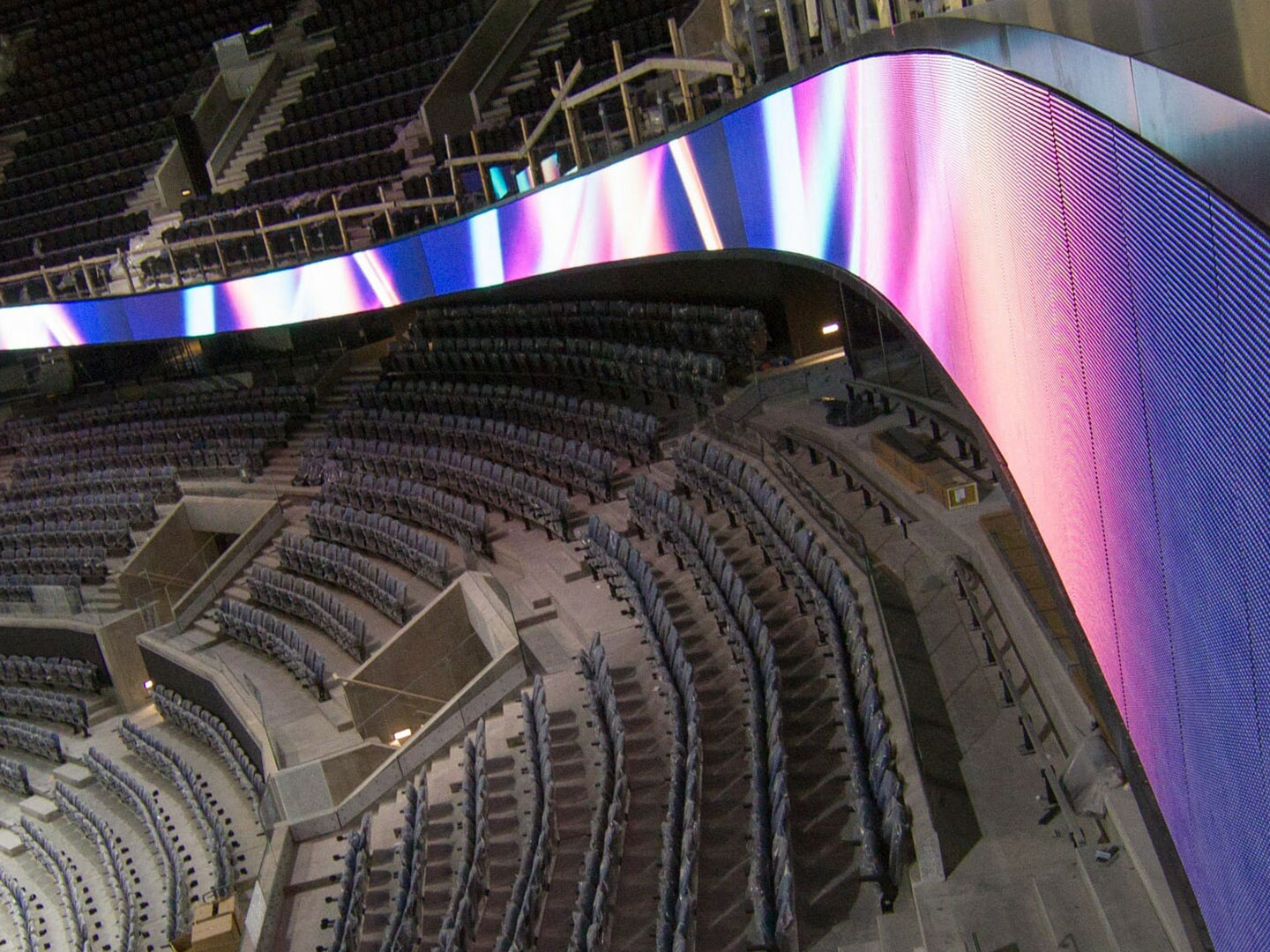
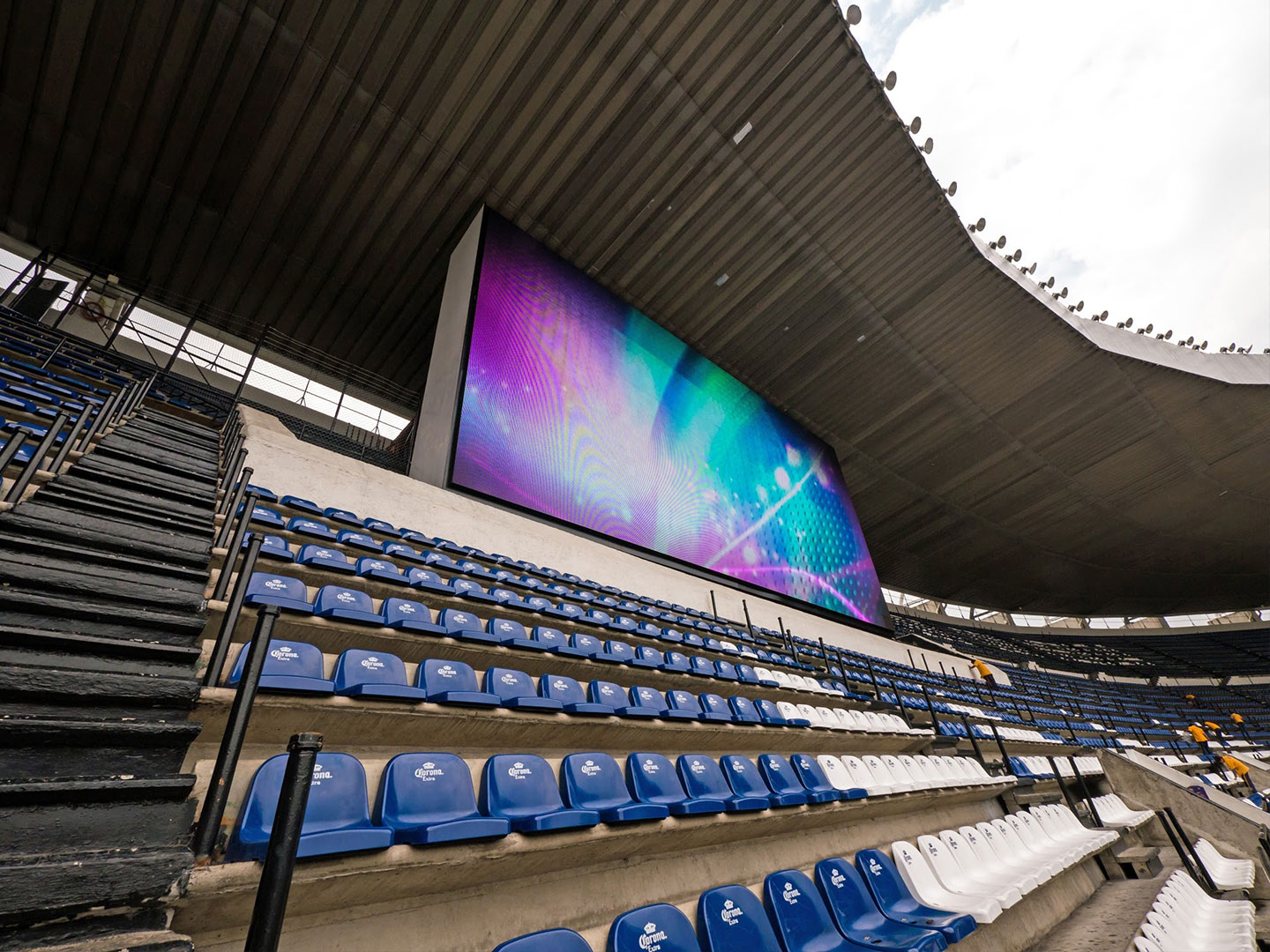
CONCOURSES AND SPONSOR CONTENT
Keep venue information and commercial messages clear
Concourse displays serve audiences moving, queuing or pausing between event activities. A planned digital signage network can distribute venue announcements, directional messages and scheduled sponsor content to selected display groups, while the content owner retains control of what is published and when.
Operational messages and commercial campaigns should be assigned clear priorities. The content plan should define which zones may carry promotions, which messages require immediate visibility and how layouts remain readable without assuming that every screen serves the same purpose.
INDOOR AND OUTDOOR CONDITIONS
Specify each zone for its actual exposure
Indoor LED displays can suit suites, hospitality areas, concourses and close-viewing locations where finer pixel pitch and controlled brightness matter. Outdoor LED screens require specifications suited to daylight, temperature, moisture, wind exposure and the intended viewing distance.
Curved structures, unusual mounting positions and architectural interfaces may need additional coordination. Each display should be evaluated with its supporting structure, power route, signal route, ventilation needs and safe service access rather than treated as an isolated surface.
INSTALLATION AND SERVICE PLANNING
Coordinate installation with the venue and event calendar
Structure and site readiness
An engineered display system starts with verified dimensions, mounting conditions, access constraints and the loads communicated to the responsible project teams. Supporting steelwork, power provision and signal pathways should be coordinated before equipment arrives on site.
Installation sequencing
Venue access may be limited by events, rehearsals, public opening hours and work by other trades. Delivery, lifting, installation, testing and handover should be sequenced around confirmed access windows, with responsibilities documented before execution.
Maintenance access
Service planning should identify how technicians can reach modules, power supplies and control equipment after installation. Front- or rear-service access, working clearances, spare-component storage and isolation procedures should be considered for each zone during design, not left until a fault occurs.
NEXT STEP
Plan displays for your sports venue
Share the venue drawings, audience zones, content requirements and event schedule with Spectracolor. We can help define a practical display scope for the locations that matter.
Talk to Spectracolor →