

SHELF EDGE DISPLAYS
Shelf edge displays that influence decisions at the shelf
The shelf is where product information, pricing and promotions meet the buying decision. Digital shelf edge displays bring changing messages directly into that space, giving retailers a compact display format that can sit closer to products than conventional overhead or wall-mounted screens.

Plan the shelf around the buying decision
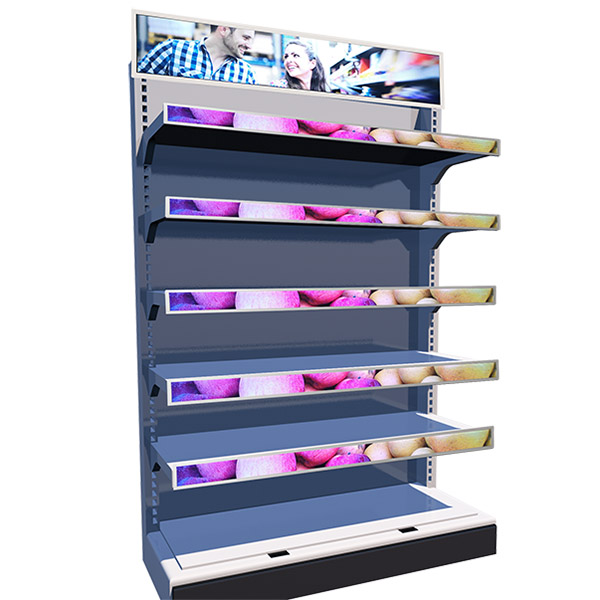
Unlike larger-format digital signage, shelf edge displays are planned around short viewing distances, limited mounting space and the need to keep products visible and accessible. Screen dimensions, content proportions, brightness and installation details all need to work with the shelving system rather than compete with it.
Make product information useful at close range
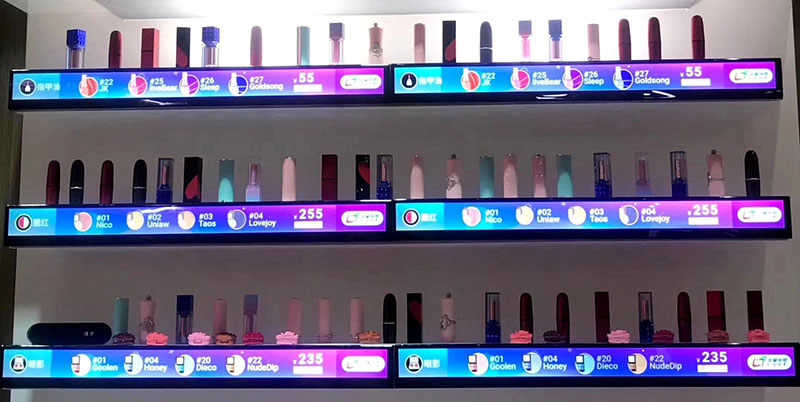
Shelf-level screens can present prices, promotional messages, product highlights and campaign content directly beside the relevant merchandise. The objective is not simply to add another screen to the store. The display should make information easier to notice and understand without making the shelf feel crowded.
Some products benefit from more explanation than a printed label can comfortably provide. A digital shelf edge display can provide space for product features, visual comparisons, short campaign messages or branded content close to the point where customers are evaluating their options.
Shelf displays can form one part of a wider digital signage plan, allowing retailers to coordinate messages between storefront, in-store and shelf-level display areas while keeping each screen format appropriate to its viewing environment.
Design for the physical retail environment
Shelf edge installations have different physical constraints from large displays. Available height can be limited. Products must remain easy to reach. Shelves may need to be restocked regularly, and display hardware should not interfere unnecessarily with merchandising or day-to-day store operation.
We therefore look at the shelf dimensions, viewing position, product layout, mounting surface, cable routing and access requirements before defining the display format.
For retailers working across several store formats, the same display concept may also need to adapt to different retail environments and shelving dimensions rather than relying on one physical configuration everywhere.
Give each display format a clear role
A shelf edge display is most useful when its role is clear within the wider retail environment. The storefront may need to attract attention from outside. Larger screens may support campaigns deeper inside the store. Shelf-level displays serve a different purpose: communicating at close range when the customer is already looking at a category or product.
Where appropriate, digital window displays can complement shelf-level communication by carrying campaign messaging at the entrance or storefront while shelf displays continue that communication closer to the product.
This division of roles helps each display format do the job that matches its location.
Keep shelf content readable
Shelf content is viewed differently from content on a large LED wall. Text, product imagery, price information and promotional graphics should be designed for a narrow screen and a short viewing distance. Trying to fit too much information into the available space can reduce clarity.
Content layouts should therefore prioritize the most useful message first, with dimensions and proportions designed around the actual display format.
Where pricing, promotions or product information originate from other business systems, those systems and integrations should be defined separately. The display itself should not be presented as automatically providing those integrations unless they are specifically included in the project scope.
Plan the installation behind the shelf
A clean shelf installation also depends on what is not immediately visible. Power distribution, data routing, mounting details, controller location, ventilation where required and maintenance access should all be considered before installation begins.
Existing retail furniture can introduce additional constraints, particularly when the display is being added to an operating store rather than incorporated into a new fixture from the beginning.
For more complex conditions, an engineered display solution can define the mechanical and electrical approach around the actual shelving, finishes and access requirements.
Review the shelf system before rollout
We start by reviewing the shelf system, available dimensions, intended content and customer viewing position. From there, we define a suitable display format, mounting approach and installation requirements. Where the project includes multiple stores or different fixture types, those variations can be reviewed before quantities and installation details are finalized.
The objective is a shelf-level display that supports the retail environment without making the shelf harder to use, maintain or merchandise.
VISUAL REFERENCES
Real display environments


NEXT STEP
Let us plan the right display system for your space.
If you are planning digital shelf edge displays for a single retail location or a wider rollout, Spectracolor can review the physical shelf conditions, display format and installation requirements with you before the system is finalized.
Talk to Spectracolor →