

INDUSTRY
Passenger-facing displays for airport terminals
Airport displays have to communicate clearly in places where people are moving, checking details and making time-sensitive decisions. Spectracolor plans digital signage for terminal environments around the intended message, viewing distance, ambient light, passenger position and architectural conditions. The display system can present flight or passenger information, guidance, service notices and commercial content; responsibility for the upstream airport or airline data platform remains outside the display scope unless separately defined.

COMMUNICATION PRIORITIES
Place the right information at each point in the terminal
Essential passenger messages
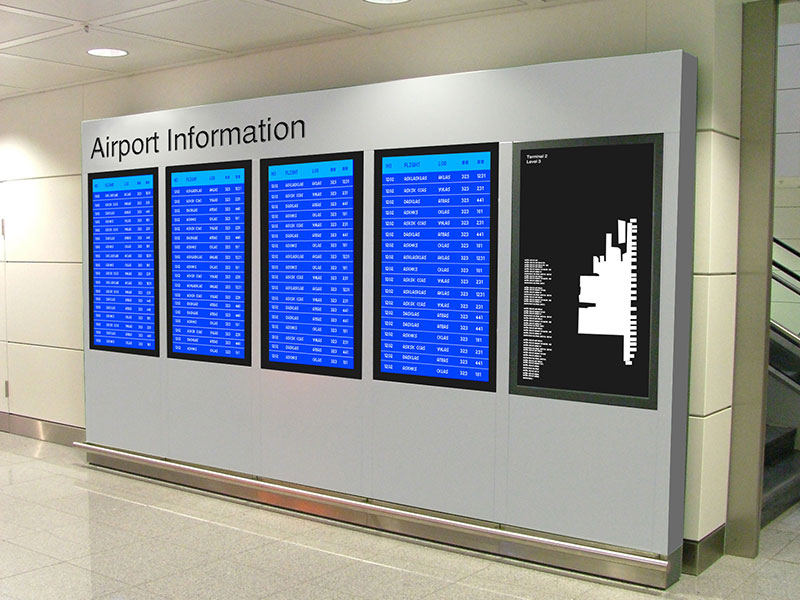
Displays may present arrivals and departures information, gate-area messages, operational notices and airport services. Legibility matters more than visual effect: type size, contrast, viewing angle and content density should suit the distance and the time passengers have to read.
Wayfinding along the passenger journey
Entrances, check-in areas, security approaches, terminal circulation, connections, gates and baggage areas each create different questions. Screens should support fixed signs and staff communication by placing relevant guidance where passengers naturally look and make decisions.
Commercial content with a separate role
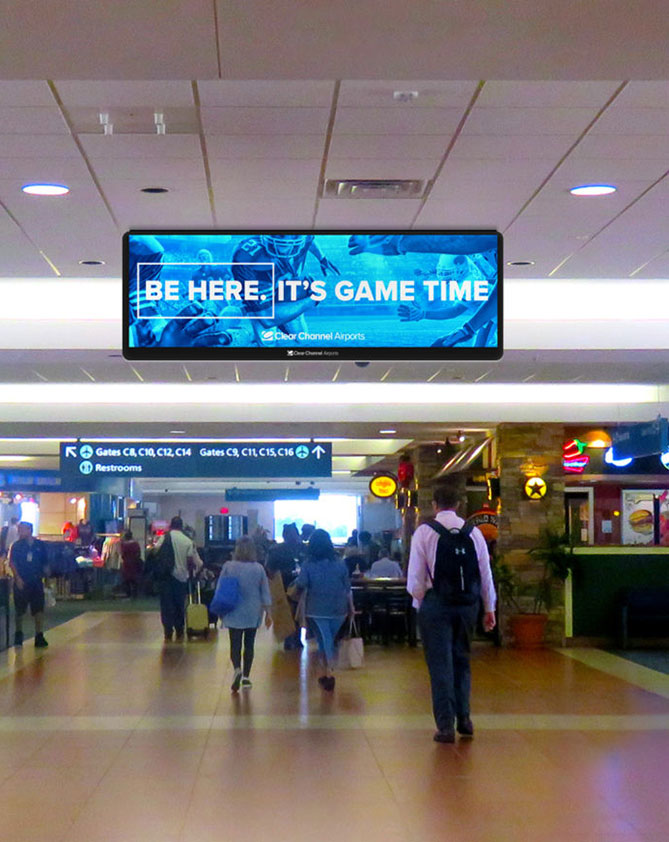
Brand campaigns, concession offers and duty-free communication can use high-visibility locations without competing with essential passenger information. The content hierarchy and screen placement should make the purpose of each display immediately clear.
VISUAL REFERENCES
Real display environments
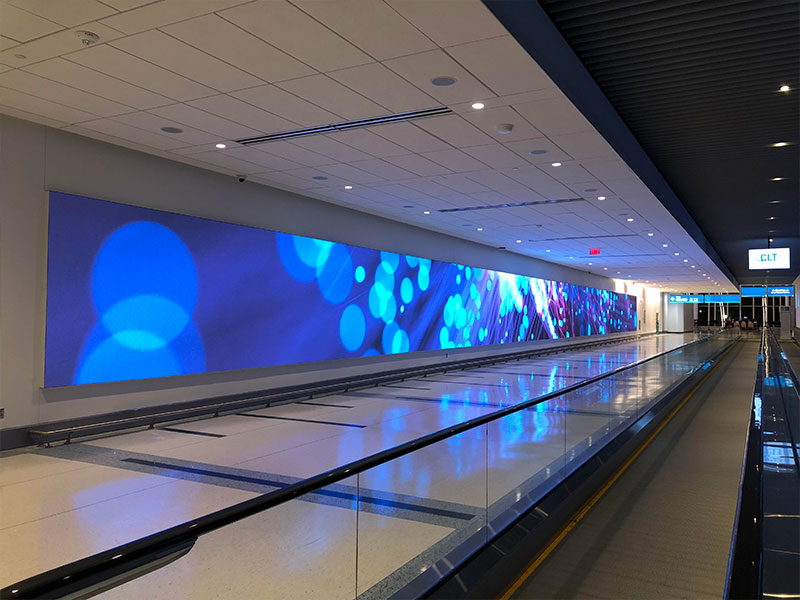
TERMINAL APPLICATIONS
Different airport zones need different display decisions
Large halls and information zones
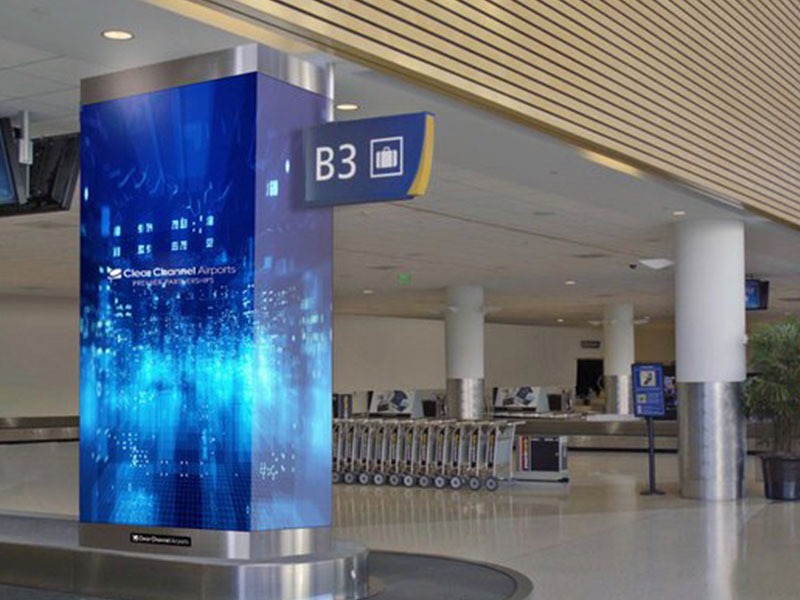
Indoor LED displays can create a large, continuous canvas in terminal halls, baggage areas or prominent information zones. They are most useful when screen scale, pixel pitch and brightness are selected for the actual viewing distance. Conventional information displays may be more suitable where passengers stand closer or need to read detailed content.
Gates, connections and passenger-service points
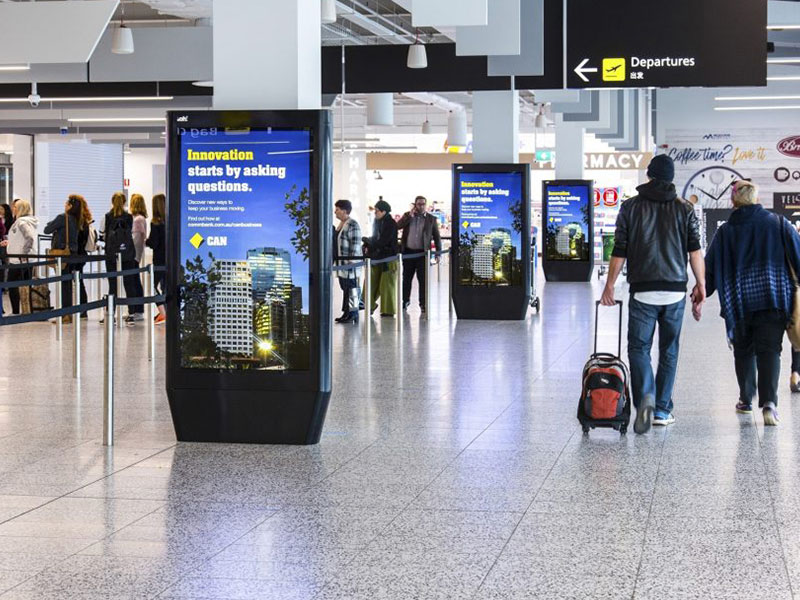
Gate seating areas and connection routes need concise information that remains visible across changing sightlines. A screen used to present flight or passenger information should be positioned around seating, queues and circulation without suggesting that the display alone manages passenger movement.
Commercial and concession areas
Retail, food-and-beverage and duty-free zones may use promotional displays or larger-format commercial media to introduce campaigns and offers. Brightness and scale should fit the surrounding light and viewing distance, while essential airport messages retain priority in shared spaces.
Directories and information kiosks
Digital building directories can help passengers locate terminals, gates, lounges and services when the information architecture is simple and readable. Self-service information kiosks may support more detailed exploration, but their role should remain informational unless specific transactional systems are separately verified and defined.
TECHNICAL PLANNING
Design for long operating periods and maintainable access
Coordinate the physical installation
An engineered display system considers wall or ceiling mounting, supporting structure, cable routes, power, ventilation and access before equipment is selected. Early coordination with architects, consultants and contractors helps align screens with finishes, circulation routes and other building services.
Plan for maintenance in an operational terminal
Airport equipment may operate for extended periods, so service access, component replacement and safe working areas should be considered from the start. Where operational importance justifies it, redundancy can be discussed at system-design level without assuming one approach for every screen.
Specify each zone separately
A gate-area display, commercial media screen, large terminal LED wall, passenger-information point and exterior approach do not share one specification. Each location should be assessed for content purpose, audience position, sightlines, ambient light, dimensions, operating requirements and long-term access.
NEXT STEP
Plan displays for your airport environment
Share the terminal and display location, intended function, available dimensions, viewing distance, ambient-light conditions and operating requirements. Drawings, photographs and information about mounting and service access will help the project team prepare an appropriate recommendation.
Talk to Spectracolor →