

INDUSTRY
Passenger displays across stations and transport hubs
Transportation hubs bring repeated passenger movement and multiple decisions into one environment. For bus terminals, rail and metro stations, ferry terminals, intercity facilities and multimodal hubs, Spectracolor plans digital signage around the way people enter, find a platform, wait, transfer and leave. Displays can present arrival or departure information, platform assignments, route messages and disruption notices. Scheduling feeds, ticketing platforms and transport-control systems are not included merely because information appears on a display; any interface responsibility must be separately verified and defined.

PASSENGER JOURNEY
Plan information around the way people move
Arrival and orientation
At entrances and service areas, passengers need a quick understanding of routes, facilities and their next decision. Digital information should support permanent signs and staff communication, using clear hierarchy rather than expecting a screen to direct movement on its own.
Platforms, departures and transfers
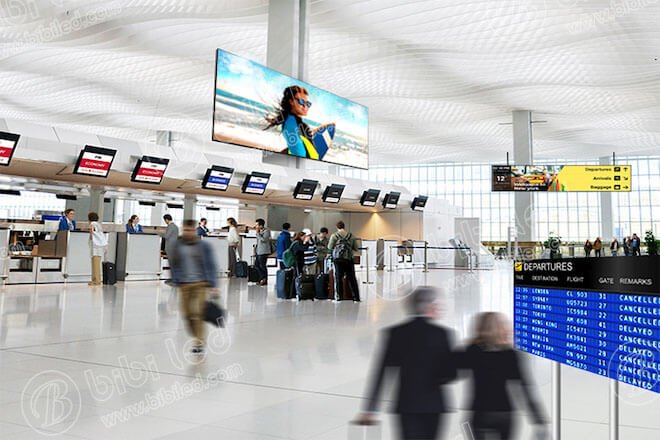
Concourses, platform approaches and transfer points require information that can be understood while people walk or scan from a distance. Displays used to present service information may show destinations, departure times, platform assignments, route changes and connections. Placement should follow sightlines and the points where passengers pause to confirm their route.
Waiting areas and onward travel
Passengers in waiting areas have more time to read service updates, destination information, local guidance and facility messages. Commercial content may also be appropriate, but essential transport information should retain visual priority.
VISUAL REFERENCES
Real display environments
DISPLAY PLANNING
Match technology to distance, exposure and dwell time
Concourse and platform visibility
For a distant audience in a broad concourse, Indoor LED displays may provide a prominent information or visual surface. Screen scale, pixel pitch, typography and content density should reflect viewing distance and changing angles. Where passengers stand close, smaller screens can make detailed route or service content easier to read.
Mixed indoor and outdoor conditions
A transport facility may combine enclosed halls, covered platforms, open-air waiting areas, entrances and outdoor approaches. Outdoor LED screens may suit exposed or high-brightness locations where distance and environmental conditions justify them. Brightness, enclosure, weather exposure, mounting and maintenance requirements should be assessed separately for every zone rather than applying one specification across the hub.
Wayfinding, facilities and commercial messages
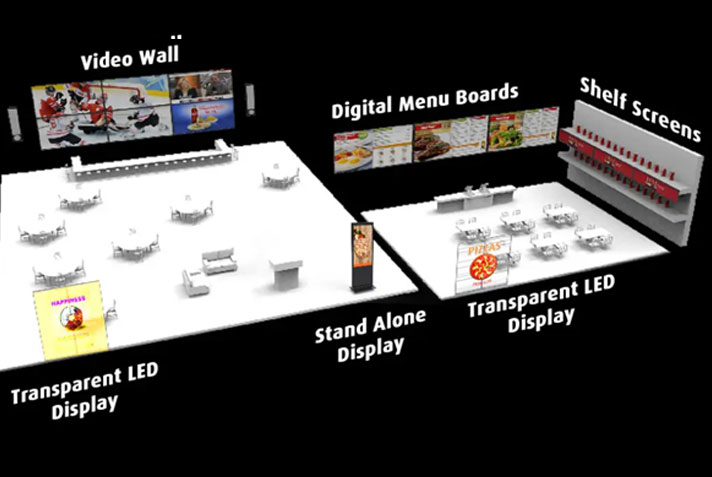
In a complex hub, digital directories may help passengers locate platforms, exits, transfers, facilities and connecting services. Information points or kiosks can offer additional detail when their purpose is defined. Retail, food-and-beverage and other commercial messages can use appropriate waiting or concourse locations without competing with service and directional communication.
OPERATIONAL DELIVERY
Coordinate installation with a working transport facility
Structure, services and safe access
An engineered display system should account for mounting, supporting structure, platform conditions, power, ventilation, cable routes and maintenance access during specification. Coordination with architects, consultants, contractors and the facility team helps align the installation with existing services and passenger circulation.
Restricted installation windows
Work in an operating station or terminal may need to follow access restrictions and limited installation periods. Planning should identify delivery routes, work areas, equipment movement and the sequence required to keep the site usable. Requirements depend on the operator and location and should be confirmed for the specific project.
Maintenance over long operating hours
Transport displays may operate for extended daily periods, making component access, replacement space and safe maintenance areas important design considerations. Product durability should suit the location, while the maintenance approach should reflect screen position, surrounding activity and the time available for service work. No single redundancy or access strategy fits every display.
NEXT STEP
Plan the display network for your transportation hub
Share the hub type, display locations, intended information, dimensions, exposure, viewing distance and passenger position. Drawings, photographs, mounting conditions and operating requirements give the project team enough context to recommend a suitable approach.
Talk to Spectracolor →