

MENU BOARDS
Digital menu boards for clear menus and flexible updates
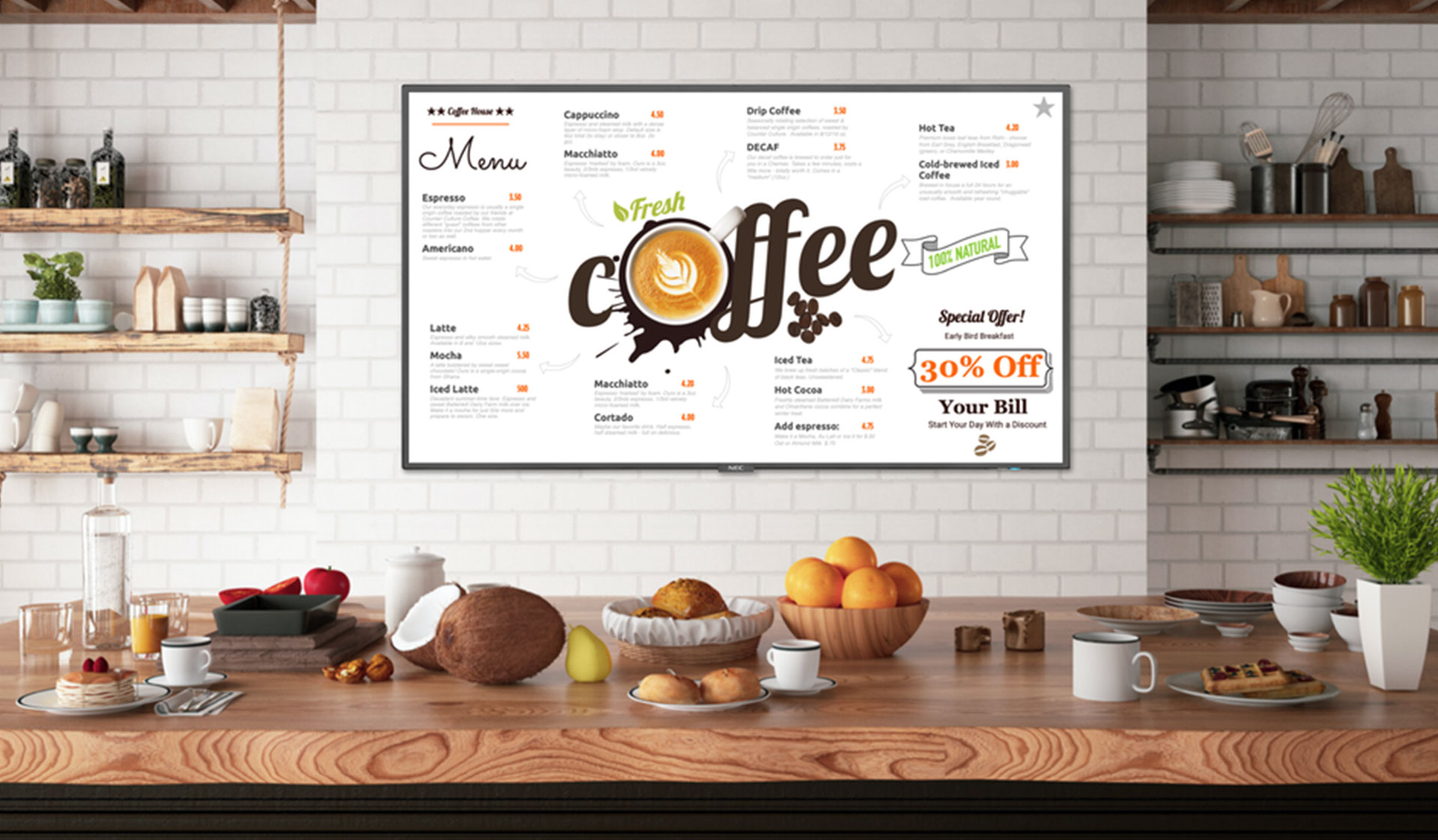
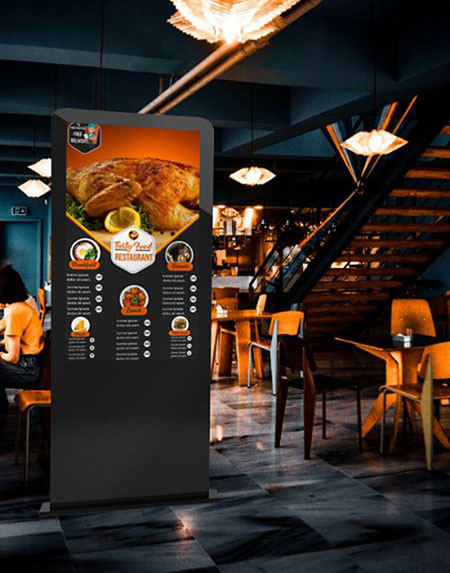
Digital menu boards give restaurants, cafés and food-service operators a flexible way to present menus, pricing, promotions and product imagery above or around the service counter.

The display itself is only one part of the result. Menu hierarchy, viewing distance, screen size, text scale, counter position and content layout all affect whether information is easy to read from the places where customers actually stand.
A good menu-board system should therefore be planned around the service environment first, then matched to the appropriate display format.
Make the menu easy to read
Menu boards often need to communicate several types of information at once: categories, products, prices, options and promotional messages.
If too much information is given equal visual weight, the menu can become difficult to scan. Content should instead be organized so that the main categories and prices remain clear while secondary information supports them without creating unnecessary clutter.
Viewing distance matters as well. Text that looks comfortable on a laptop may be difficult to read from several metres away. Font size, spacing, contrast and image proportions should therefore be reviewed against the actual screen dimensions and customer position.
Plan screen groups around the counter
Many menu-board installations use several displays together rather than one large screen.
The number of screens should be based on the amount of menu information, the available wall or bulkhead width and the way customers approach the counter.
A three-screen layout may divide categories differently from a five-screen installation. Displays should also be positioned so that structural features, lighting, decorative finishes or equipment do not interrupt the intended viewing area.
For larger or more unusual mounting conditions, an engineered display solution can define the structural, electrical and access requirements around the actual space.
VISUAL REFERENCES
Real display environments

Keep updates flexible without overcomplicating the system
One advantage of digital menu boards is that content can be changed without replacing printed menu panels.
This can support different menu periods, seasonal offers, temporary promotions or pricing changes where the selected content system and project scope allow it.
The display, however, should not be presented as automatically controlling restaurant data.
If prices, availability or menu information originate from a POS platform, menu database, CMS or another business system, the responsibilities and integration requirements for those systems should be defined separately.
That distinction is important when planning digital signage for restaurants and other food and beverage environments.
Define who controls the content
A technically correct screen installation can still become difficult to manage if nobody is responsible for the information being shown.
Before rollout, it is useful to define who prepares content, who approves pricing and promotional changes, and who is allowed to publish updates.
For a single location this may be simple. For a multi-branch operation, consistency can become more important because the same campaign may need different prices, products or availability by location.
The display system should therefore be planned around the actual content-management responsibility rather than assuming every branch will operate in the same way.
Keep menus consistent across multiple locations
Multi-location projects often require a common visual structure while still allowing for differences between branches.
Screen quantities, counter dimensions, mounting surfaces and available viewing distances may vary from one location to another.
A rollout should therefore establish which elements need to remain consistent and which can adapt to the physical conditions of each branch.
Standardizing the general display approach can make future planning easier, while site-specific checks help avoid forcing one installation detail into every location.
Plan power, cabling and service access
Menu boards are often installed above active counters where access can become difficult after the restaurant is operational.
Power distribution, data cabling, mounting hardware, controller location and maintenance access should therefore be considered before installation.
Cable routes also need to work with ceiling finishes, bulkheads, kitchen-service areas and other building services already present around the counter.
Where work takes place in an operating restaurant, installation planning should consider access hours, customer areas and the need to avoid unnecessary disruption.
Think beyond the first installation
Menu boards should also be planned with future maintenance in mind.
Displays may eventually need servicing or replacement. Mounting details should therefore allow practical access without unnecessarily dismantling surrounding finishes.
For larger rollouts, keeping records of screen models, mounting arrangements, cabling and controller locations can also make future maintenance and replacement work more straightforward.
NEXT STEP
Discuss your menu-board requirements
If you are planning digital menu boards for a restaurant, café, food court or multi-location rollout, Spectracolor can review the screen layout, viewing conditions, mounting requirements and installation approach with you before the system is finalized.
Talk to Spectracolor →